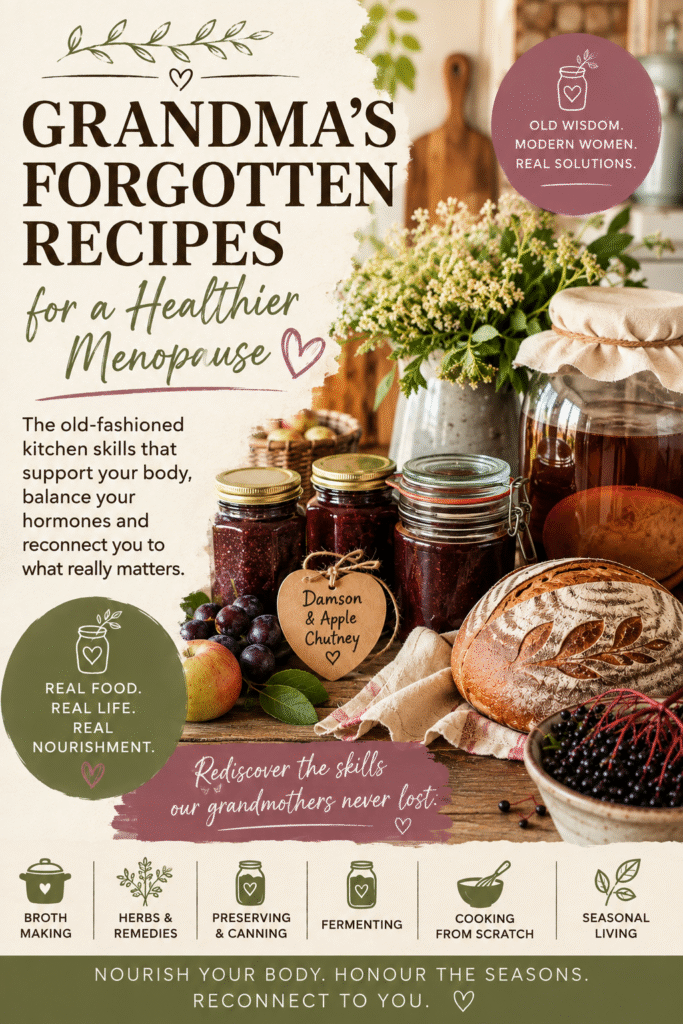
The Menopause Pantry: Grandma’s Forgotten Recipes for a Healthier Menopause.
There’s something rather lovely happening at the moment.
All those things that might once have been dismissed as Grandma hobbies – baking bread, growing herbs, making jam, fermenting vegetables, preserving the harvest and simmering bones for broth – are finding their way back into our kitchens.
And I am absolutely here for it.
But I don’t think this return to Grandma’s forgotten recipes is simply nostalgia.
Because somewhere along the way, as food became quicker, easier and more convenient, many of us stopped learning the everyday kitchen skills that previous generations simply took for granted.
Our grandmothers didn’t make broth because collagen was trending. They didn’t ferment vegetables to improve their microbiome. They didn’t grow herbs because someone on Instagram told them rosemary contained antioxidants.
They did these things because they were practical.
Food was grown, cooked, preserved and used. Seasons mattered. A glut of summer tomatoes became jars for winter. Leftover bones became broth. Milk became yoghurt. Cabbage became sauerkraut. Fruit was bottled, stewed or turned into jam. Bread was made slowly, at home.
And while I’m certainly not suggesting we return to some rose-tinted version of the past — women had enough bloody work to do already — I do wonder whether, in making food more convenient, we accidentally left some rather useful wisdom behind.
Especially for menopause.
Because the very things we talk about supporting now our gut, blood sugar, bones, muscles, liver, nervous system and long-term health can all benefit from something beautifully simple:
Real food, prepared with care and eaten in season.
So perhaps we don’t need to live like our grandmothers.
But there are a few things worth learning from them.
Let’s open the Menopause Pantry and rediscover some of those forgotten kitchen skills.
Preserving: Making the Most of What We Have
Before supermarkets gave us strawberries in December and tomatoes all year round, eating seasonally wasn’t a wellness choice. It was simply how people ate.
When the garden, hedgerows or local farms produced an abundance of something, our grandmothers knew how to make it last.
Fruit was stewed, bottled or turned into jam. Vegetables were pickled. Tomatoes became sauces and chutneys. Apples were stored, cooked or preserved. Berries gathered from the hedgerows found their way into syrups, jellies and preserves. These are the preserving jars that I use HERE.
Nothing particularly fancy. Just practical knowledge that meant the abundance of one season could continue nourishing the family into the next.
Why bring this back in menopause?
One of the things I love most about preserving is that it naturally encourages us to eat a greater variety of plants across the year.
And variety matters.
Different fruits, vegetables, herbs and spices provide different fibres and plant compounds that help support our gut microbiome, something that becomes increasingly important during menopause, when our gut health is closely connected with everything from digestion and immunity to inflammation and the way our body processes and eliminates hormones.
But I think there’s another benefit that we don’t talk about nearly enough.
Preserving makes us pay attention.
You start noticing when the blackberries appear. When the apples begin falling. When the tomatoes suddenly all ripen at once. When the elderberries are ready and when the sloes need that first touch of frost.
Instead of eating the same foods every week of the year, we begin reconnecting with the natural rhythm of abundance, preservation and rest.
And there’s something incredibly satisfying about opening a jar in the middle of winter and knowing that you made it from something you grew, gathered or were given during the summer.
Start small
You don’t need a pantry lined with hundreds of jars or an allotment overflowing with produce.
Start with what you have.
A bowl of apples could become stewed apple for your morning porridge. A glut of tomatoes could become a simple tomato sauce for the freezer. Blackberries gathered on a walk can be frozen for winter breakfasts. Herbs can be dried before the plants disappear for the year.
Preserving isn’t about becoming completely self-sufficient.
It’s about wasting less, noticing more and keeping a little of one season to nourish you through the next.
Grandma’s forgotten skill: When nature gives you more than you can eat today, learn how to save some for tomorrow.
Making Broth: Before Collagen Came in a Tub
Long before bone broth became a wellness trend, our grandmothers were making it because throwing away a perfectly good chicken carcass would have been unthinkable.
Bones, vegetable peelings, herbs and whatever else needed using would go into a pot with water and gently simmer away.
The result was something deeply nourishing, incredibly useful and practically free.
Today, of course, we’ve managed to turn many of those same nutrients into powders, supplements and beautifully packaged products.
And while there’s absolutely a place for convenience, sometimes it’s worth remembering that nourishment can begin with the bones left over from Sunday dinner.
Why bring this back in menopause?
We hear a lot about protein in menopause, and rightly so.
Protein becomes increasingly important as we get older, particularly for maintaining muscle, supporting bone strength and helping us stay strong and independent as we age.
But simply adding more protein isn’t the whole story.
We also need to think about how well we’re digesting, absorbing and using the food we’re eating.
Our digestive system has to break protein down into amino acids that can be absorbed through the small intestine, while the liver plays an important role in processing and using those amino acids throughout the body.
This is why, in the Menopause Pantry, I don’t believe in looking at nutrients in isolation.
We need protein, absolutely. But we also need to create an internal environment that supports digestion, gut health and liver function so our body can make good use of the nourishment we’re giving it.
And this is where something as simple as homemade broth can be such a useful addition.
If you are interested in the merits of bone broth versus collagen supplements, you might find this blog post interesting.
Bone broth provides fluid alongside amino acids including glycine and proline, which the body can use to make collagen. Depending on the ingredients used, it can also provide small amounts of minerals and other nutrients.
A slow cooker is perfect for making your own homemade stocks. I use one similar to this and wouldn’t be without it, especially as we come into slow cooker season.
Add it to soups, stews and gravies, use it to cook grains or lentils, or simply warm a mug and drink it as a comforting savoury alternative to tea.
It isn’t a miracle food, and it certainly isn’t a replacement for eating enough protein.
It’s simply another way of adding nourishment while creating the kind of simple, home-cooked meals that can support our gut, liver and overall health.
Because menopause nutrition isn’t just about what we eat. It’s also about supporting the body that’s receiving it.
Growing & Drying Herbs: A Little Pharmacy Outside the Kitchen Door
There was a time when knowing what grew in the garden was simply part of knowing how to feed and care for your family.
Mint for tea. Rosemary with the Sunday roast. Thyme in soups and stews. Sage with meat. Lavender tucked into drawers or brewed into something soothing.
Herbs weren’t exotic ingredients bought in tiny plastic packets from the supermarket. They grew outside the back door, and when summer abundance began to disappear, they were gathered and dried for the months ahead.
I’m not suggesting we abandon modern medicine and start treating everything with a bunch of rosemary from the garden.
But I do think we’ve forgotten just how much nutritional value can be hiding in something we often think of as little more than a garnish.
Why bring this back in menopause?
Herbs contain a wonderful variety of naturally occurring plant compounds, and using more of them is one of the simplest ways to increase the diversity of plants in our diet.
And that diversity matters for our gut microbiome.
Different plant foods provide different fibres and plant compounds that interact with and help support the community of microbes living in our gut.
So rather than searching for one particular menopause herb that’s going to magically balance our hormones, I would much rather see us using more herbs, more often.
A handful of parsley scattered over dinner. Rosemary added to roasted vegetables. Sage stirred through beans. Mint chopped into yoghurt. Thyme simmered in a casserole.
They might seem like tiny additions, but alongside our vegetables, fruit, beans, whole grains, nuts, seeds and spices, they all contribute to the variety we’re giving our gut microbes to work with.
Grow a little yourself
You don’t need a cottage garden. A few pots on a windowsill or by the back door will do.
Mint, parsley, rosemary, thyme, sage and chives are all wonderfully useful places to start.
And when you have more than you can use, dry some.
Gather your herbs while they’re abundant, dry them thoroughly and store them in clean jars. Suddenly, something that was growing outside your back door in August can still be flavouring your soups and stews in January.
It’s simple. It’s inexpensive. It reduces waste and makes everyday food taste better.
I use these individual mini greenhouses to plant my seeds.
But perhaps most importantly, it reconnects us with where our food comes from.
Grandma’s forgotten skill: Grow what you can, use what you grow and preserve a little abundance for the season ahead.
Baking: When Bread Was Just Bread
Somewhere along the way, bread went from being one of our most basic foods to something many women feel they should avoid.
Our grandmothers weren’t counting the carbohydrates in a slice of homemade bread. Flour, water, salt and time created something filling, affordable and useful that could feed a family.
And perhaps there’s something worth remembering in that simplicity.
Why bring this back in menopause?
Carbohydrates aren’t the enemy in menopause.
Our bodies need glucose for energy, and choosing good-quality carbohydrates alongside protein, healthy fats and fibre can be part of a nourishing, blood-sugar-friendly meal.
Baking at home also gives us something increasingly difficult to find in the supermarket: control over what’s actually in our food.
A simple homemade loaf doesn’t need emulsifiers, preservatives, added sugars and a long list of ingredients we wouldn’t have in our own pantry.
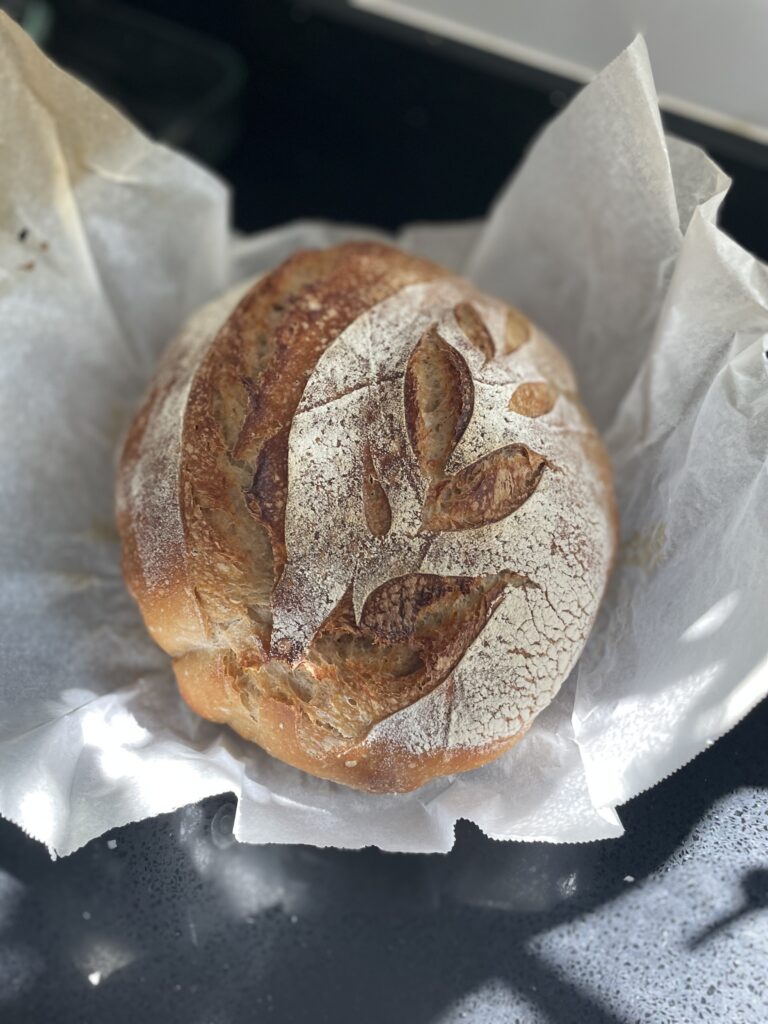
And if you venture into sourdough, slow fermentation brings another traditional process back into the kitchen, allowing microbes and time to begin breaking down the flour before we even eat it. Learn more about starting your own sourdough and the potential gut health benefits in this blog post.
You don’t need any special equipment to get started, but THIS has everything you need if you don’t want to just make do.
But perhaps the greatest benefit is even simpler.
Making bread with your own hands reconnects you with one of our oldest foods.
Mix it. Knead it. Wait for it. Bake it. Eat it.
No guilt required.
Grandma’s forgotten skill: Don’t be afraid of food you could make in your own kitchen.
Fermenting: Before We Bought Probiotics
Long before we could buy bottles of probiotics, people were fermenting food.
Yoghurt, kefir, sauerkraut, pickles and other fermented foods weren’t created as wellness products. Fermentation was simply a practical way of preserving food and making seasonal abundance last longer.
Why bring this back in menopause?
Our gut microbiome plays an important role in digestion, immunity, inflammation and hormone metabolism, so supporting it becomes part of that bigger menopause picture.
Fermented foods can introduce live microorganisms and provide compounds created during fermentation, while the plants we’re eating alongside them provide food for our existing gut microbes.
And you don’t need to start fermenting everything in sight.
Try a spoonful of sauerkraut alongside a meal. Make yoghurt or kefir. Experiment with fermented vegetables. Or keep a sourdough starter bubbling away on the kitchen counter.
Start with one thing, learn how to do it properly and make it part of your kitchen.
Because perhaps we don’t need another expensive product promising to fix our gut.
Maybe we just need to feed it better.
These fermentation jars are on my wish list.
Grandma’s forgotten skill: Before something came in a capsule, it often came from the kitchen.
Cooking From Scratch: Knowing What to Do With Food
Perhaps the greatest forgotten skill isn’t one particular recipe at all.
It’s simply knowing what to do with food.
Our grandmothers could look at what was growing, what needed using and what was already in the cupboard and turn it into dinner.
No recipe box arriving on the doorstep. No protein bar required because lunch hadn’t happened. No panic because an ingredient was missing.
They learned to cook with what they had.
And at a time when the weekly food shop seems to cost more every time we do it, that ability to use what we have, waste less and make ingredients stretch across several meals might be one of the most useful skills we can relearn.
Why bring this back in menopause?
Because cooking from scratch puts us back in charge of what’s on our plate.
We can add more vegetables, beans, herbs and spices. Choose good-quality fats. Include enough protein. Use carbohydrates that actually satisfy us. Reduce our reliance on ultra-processed foods without needing another restrictive diet.
And perhaps most importantly, we begin to trust ourselves around food again.
The Menopause Pantry isn’t about cooking everything from scratch or spending your life in the kitchen.
It’s about having enough knowledge, ingredients and confidence to nourish yourself well in real life.
Sometimes that’s a beautiful homemade meal.
Sometimes it’s eggs on toast.
Both count.
Grandma’s forgotten skill: Learn a few simple ways to turn what you already have into something that nourishes you.
Following the Seasons: Eating What Comes Next
Our grandmothers didn’t need a seasonal eating guide.
They ate with the seasons because the seasons decided what was available.
Spring brought one set of foods, summer another. Then came the abundance of late summer and autumn, when gardens, trees and hedgerows seemed to produce everything at once and preserving began in earnest.
There is something we’re missing when every food is available all year round.
Eating seasonally naturally brings variety into our diet, but it also encourages us to notice what’s happening around us.
What’s growing?
What’s abundant?
What can I use now?
What could I preserve for later?
You don’t need to grow all your own food to reconnect with this rhythm. Grow a few herbs or tomatoes. Visit a local farm shop. Accept the carrier bag of apples your neighbour is trying desperately to give away. Pick blackberries on your morning walk.
It’s less about following rules for seasonal eating and more about allowing the season you’re actually living in to influence what’s happening in your kitchen.
Grandma’s forgotten skill: Instead of deciding what you want to eat and then looking for it, occasionally look at what’s available and decide what you can make with it.
It Turns Out, I’ve Become Grandma…
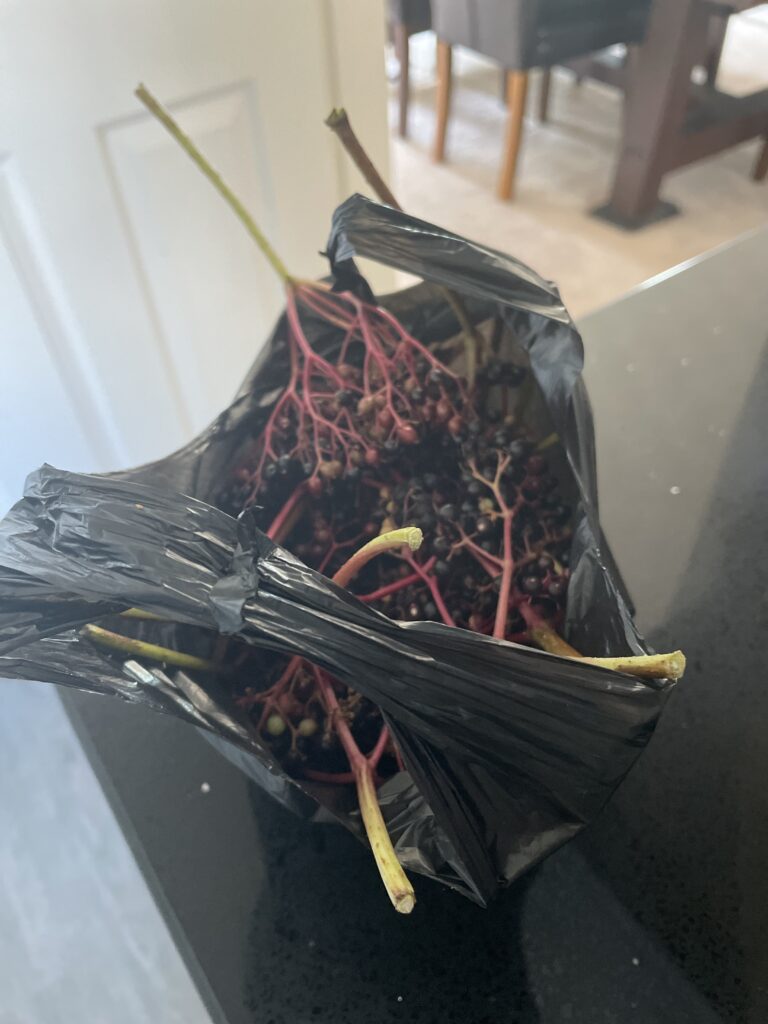
Dog walks often see me return with a (clean) poo bag from natures pantry, these are elderberries.
I made a batch of elderberry cordial last year but gave so much away to family and friends with sniffles that I ran out quickly so I plan to make more this year.
When I was looking to buy some it was £20 a bottle!!
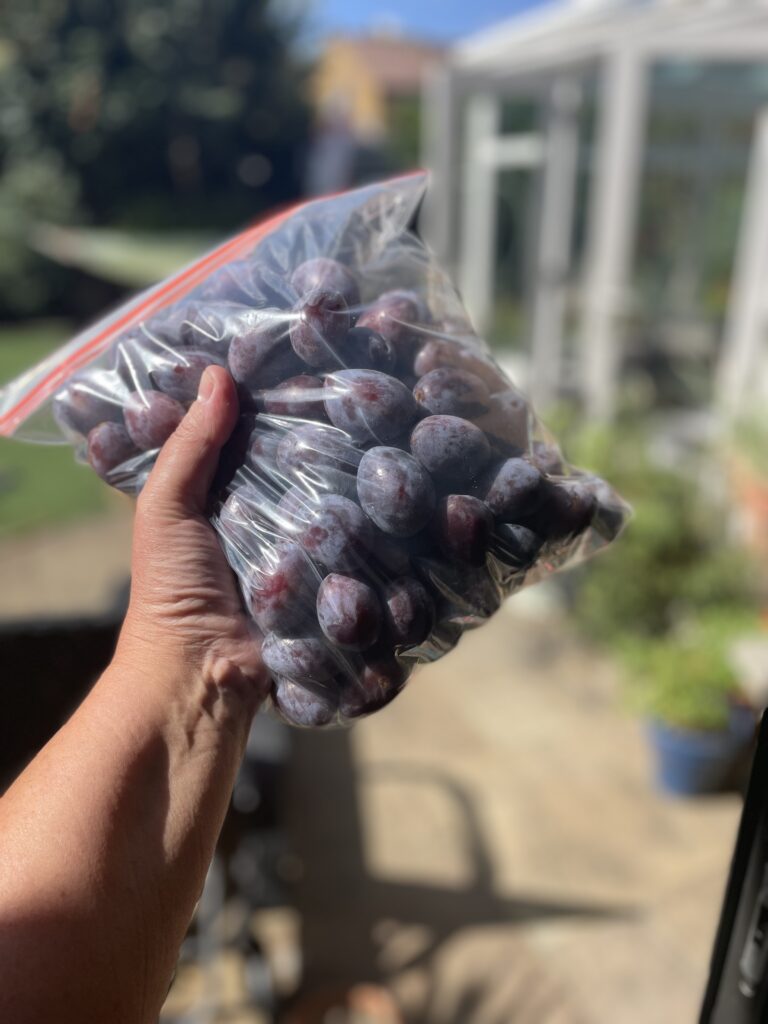
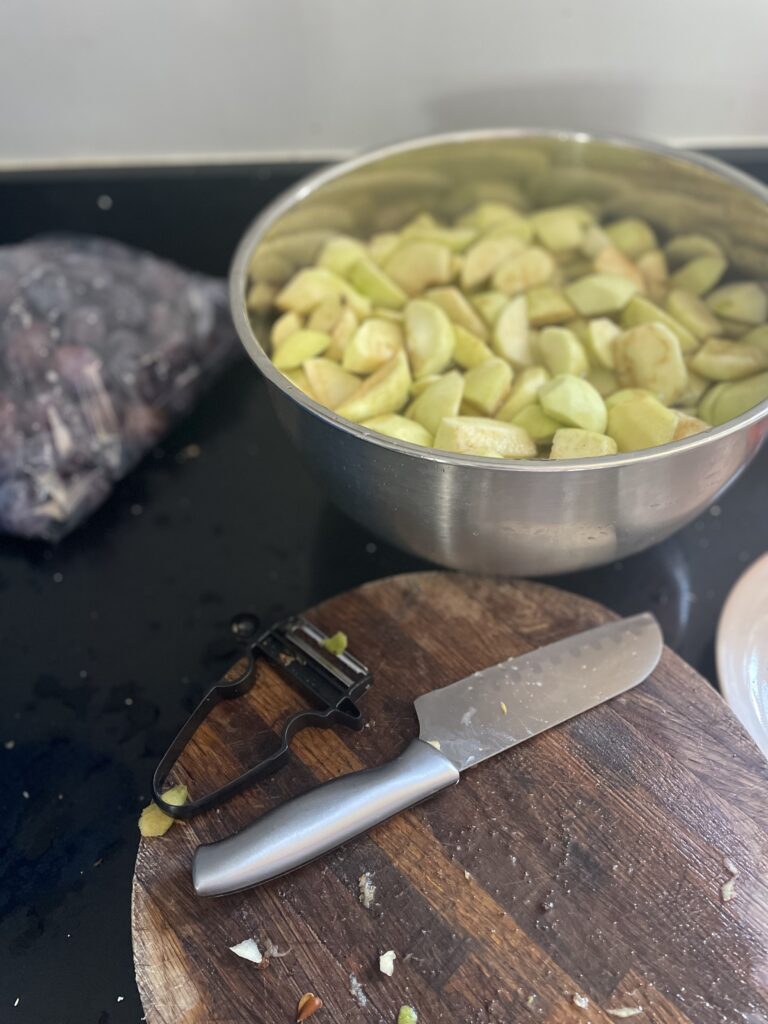
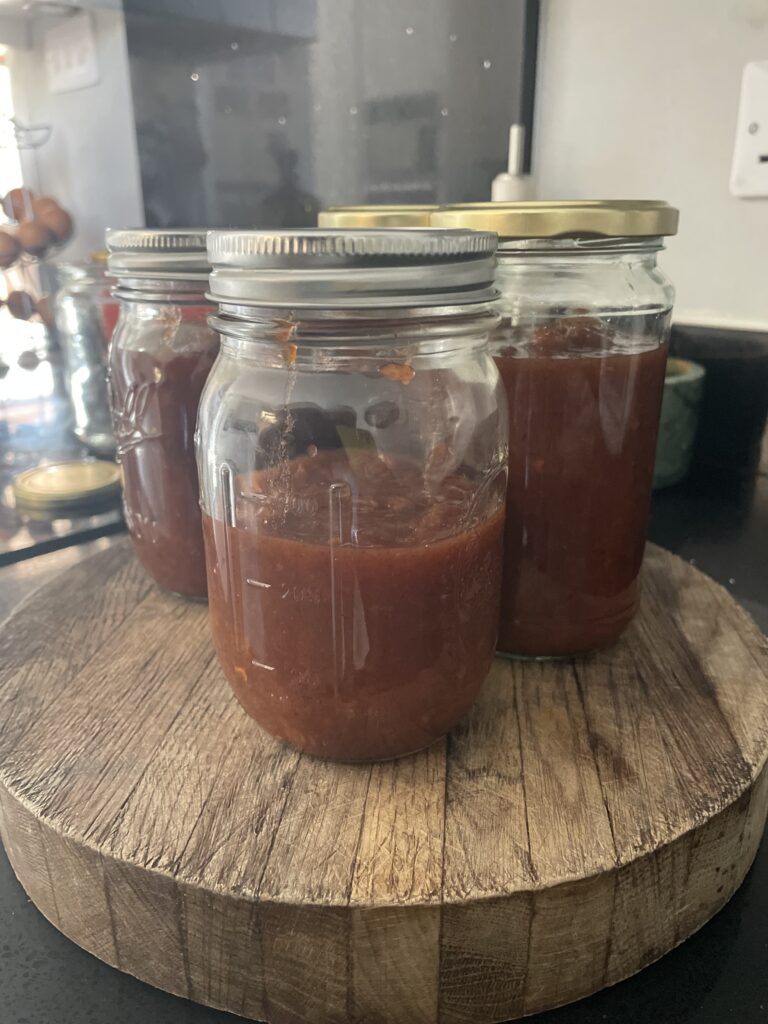
Lovely neighbours shared damsons and apples with me.
I preserved these into chutney.
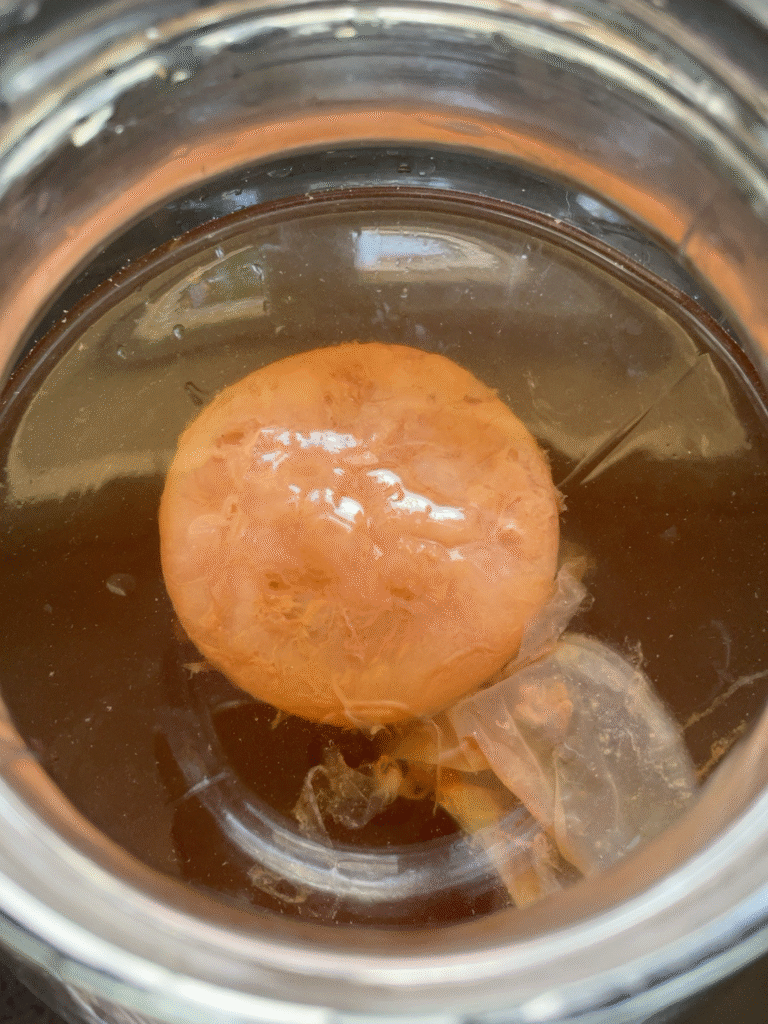
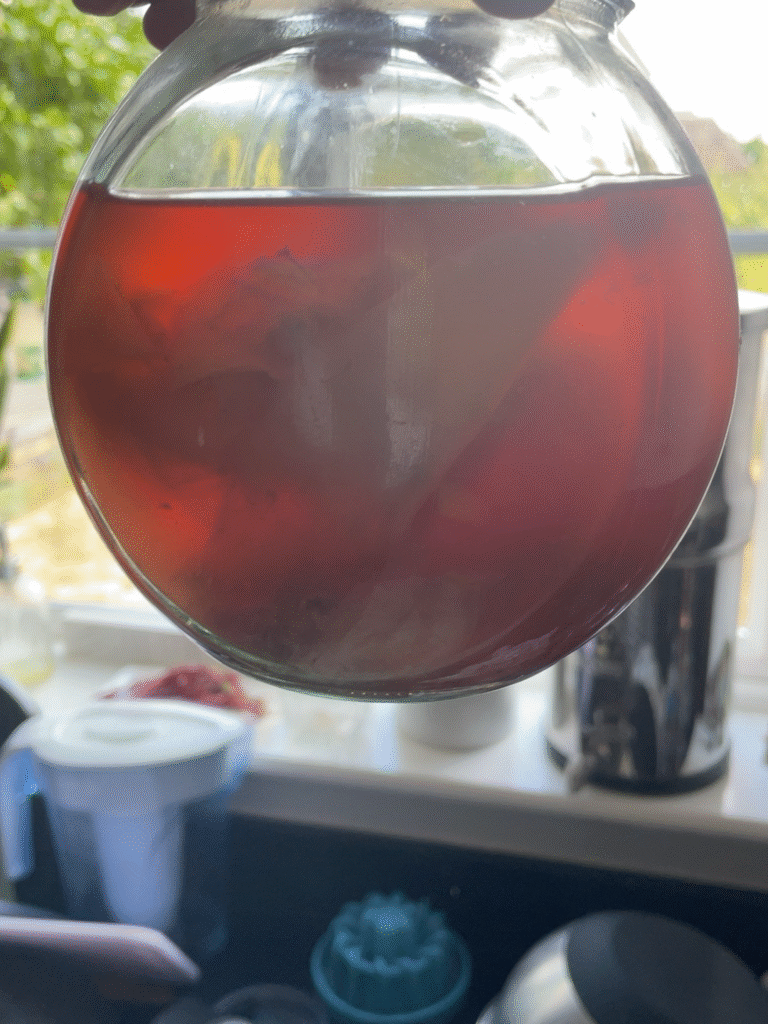
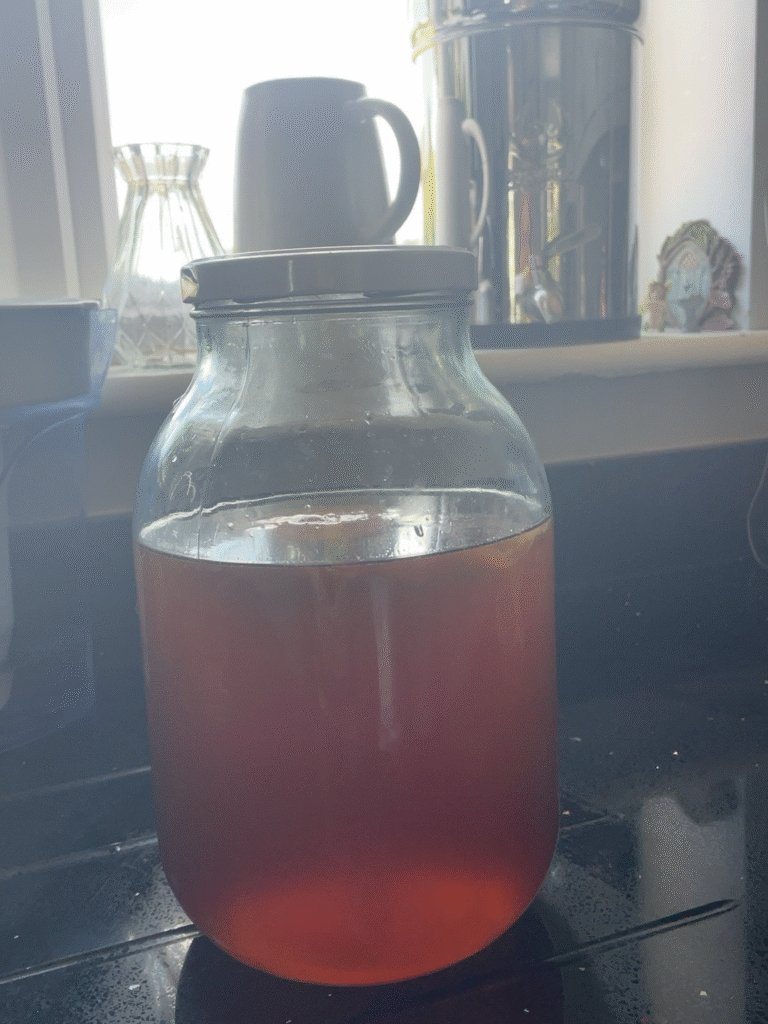
Below is my SCOBY hotel and my latest kombucha brew.
A SCOBY (Symbiotic Culture of Bacteria and Yeast) is the living culture used to ferment sweetened tea into kombucha, transforming it into the slightly tangy, naturally fermented drink.
Kombucha can be a lovely alternative to commercial fizzy drinks, and, a bit like a sourdough starter, the culture needs to be kept alive and nurtured. A new layer of SCOBY often forms with each batch, and any extras can be kept together in what fermenters rather wonderfully call a “SCOBY hotel”.
I bought this product for my first batch, after that they just multiply and all you have to do is feed them sweet tea.
None of this started because I decided I needed to adopt “Grandma hobbies.”
I just became increasingly curious about learning how to make things for myself.
- How do I make sourdough?
- What can I do with all these tomatoes?
- Can I preserve these apples?
- How do I make kombucha?
- What can I gather from the hedgerows?
And somewhere along the way, I’ve realised that the more I learn, the more connected I feel. To my food, to the seasons, to where I live and, actually, to myself.
A Little Note About the Links in This Post
You’ll notice I’ve included a few links to some of the things I genuinely use in my own kitchen for preserving, fermenting, baking and making the most of my Menopause Pantry.
Some of these are affiliate links, which means that if you choose to buy something through one of them, I may receive a small commission at no extra cost to you.
I’ll only ever share things I actually use, love or would happily recommend and your support helps me to keep creating the recipes, resources and articles you find here at The Healthy Menopause.
So, thank you. 💚
Maybe Grandma Knew Something After All
I don’t want to go backwards.
I like my washing machine, my freezer and the fact that I can buy an avocado in Hertfordshire in February far too much for that.
But perhaps progress doesn’t have to mean leaving everything that came before behind.
There is wisdom in knowing how to feed ourselves.
In knowing how to turn bones into broth, flour into bread and an unexpected bag of apples into something that will still be sitting in the pantry months later.
There is value in knowing what’s growing around us, eating a greater variety of real food and understanding how to make nourishing meals from what we already have.
And perhaps that’s what these so-called Grandma hobbies are really giving us.
Not another list of things we should be doing.
But a way back to feeling a little more connected – to our food, our bodies, the seasons and ourselves.
We don’t need to live like our grandmothers did. But I think there are a few things they knew that are absolutely worth remembering.
Ready for a Different Approach to Menopause?
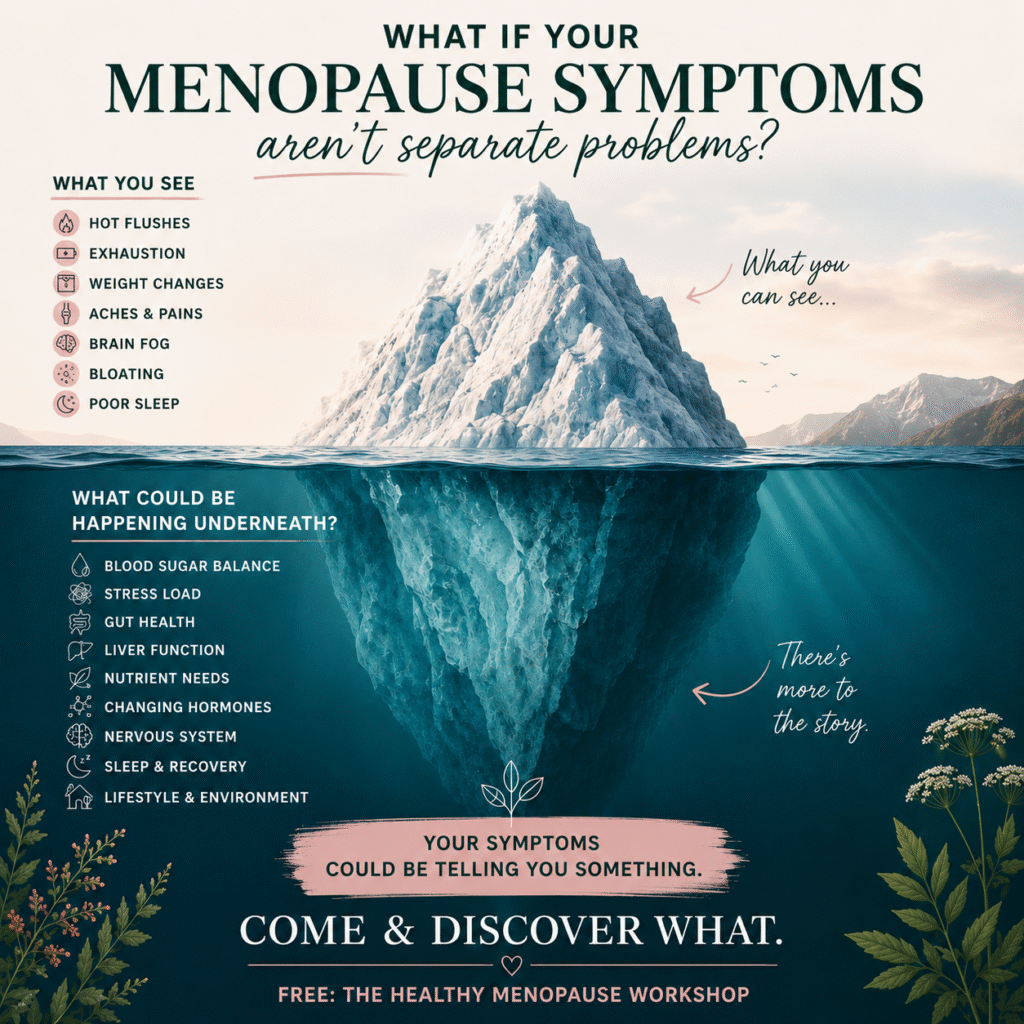
If you’re tired of being told to eat less, exercise more, take another supplement or simply accept that feeling exhausted, inflamed and unlike yourself is part of getting older, I’d love you to join me for my FREE Healthy Menopause Workshop on Wednesday 9th September at 12 noon.
We’ll look beyond individual symptoms and start joining the dots between what’s happening in your body, what it might be asking for and how real food and nourishment can become part of the solution.
No diets. No quick fixes. No one-size-fits-all menopause checklist.
Just a practical, whole-body approach to helping you understand and support the body you’re living in now.
🌙 This Week’s Moon Kitchen Recipe
Moon Phase: 🌗 Last Quarter | Support
Moon Kitchen Focus: Support progesterone, your nervous system and balanced blood sugar with comforting, nourishing foods.
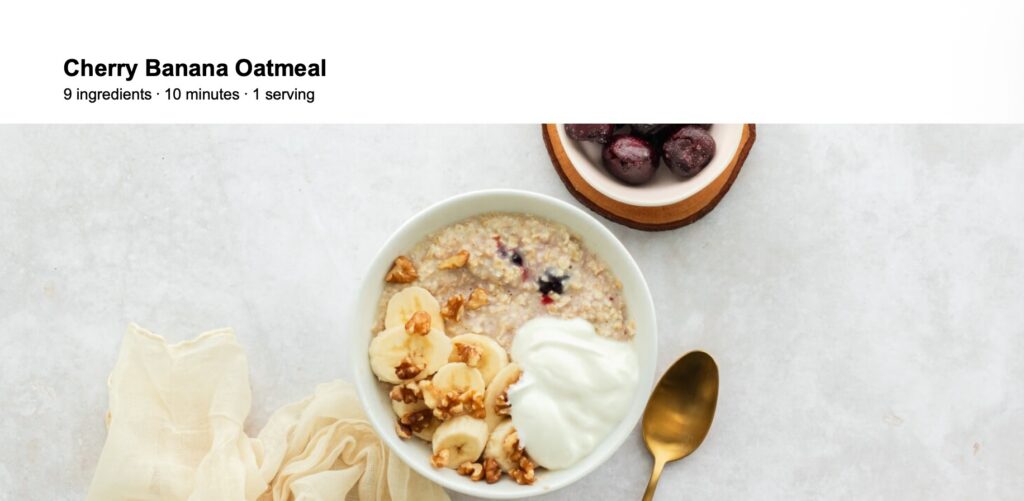
This Week’s Recipe: Cherry Banana Oatmeal
As the cycle begins to slow, the Last Quarter Moon encourages us to listen to our bodies with kindness. During the luteal phase it’s completely normal to experience increased hunger, and even after menopause this remains a valuable time to reduce stress, nourish the nervous system and support the hormones your body continues to produce.
This comforting bowl of cherry banana oatmeal combines slow-release oats, creamy yogurt, walnuts and naturally sweet fruit to provide fibre, healthy fats, protein and magnesium. It’s the perfect reminder that supporting your hormones often begins with giving yourself permission to eat enough real food.