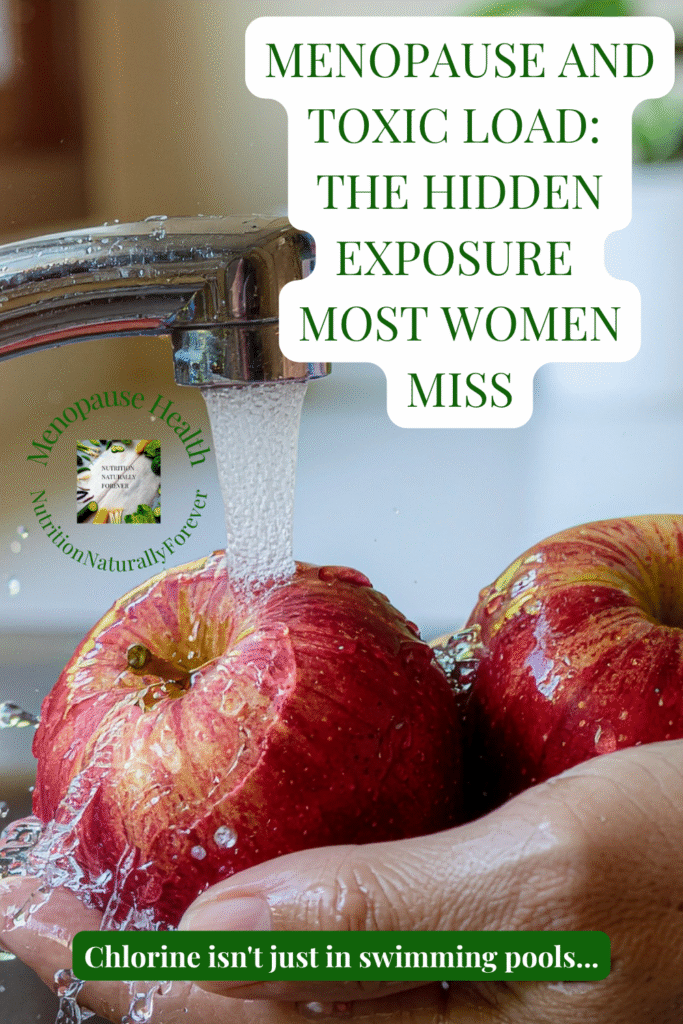
Chlorine Exposure and Menopause: Simple Ways to Reduce Your Toxic Load.
Most women know chlorine is in swimming pools.
Fewer realise it’s also in tap water, showers, hot tubs, cleaning products and even the steam they breathe.
During menopause, when your body is already working harder to maintain balance, could this everyday chemical be adding to your toxic load?
The question isn’t whether chlorine is good or bad.
The question is whether your body is carrying more than it needs to.
Menopause Is a Natural Transition That Works Better With a Framework
Menopause is a natural transition.
Just as puberty requires your body to adapt to changing hormones, menopause asks your body to do the same.
The difference is that many women are expected to navigate this transition with very little understanding of what is actually happening inside their bodies.
I often say that the body is run by hormones not calories, as the diet industry will have you believe, because it’s true.
Hormones are the chemical messengers that influence everything from your sleep and energy levels to your mood, metabolism, appetite and body composition.
- Every hot flush.
- Every night waking.
- Every craving.
- Every shift in weight.
- Every one of these symptoms is influenced by hormonal signals.
The question is: what influences those hormones?
This is where a framework becomes important.
Your hormones rely on healthy foundations to function well.
They depend on your liver to process and remove used hormones, your gut to eliminate waste, your nervous system to respond appropriately to stress and your immune system to manage inflammation and repair.
When these systems are supported, your body is better able to adapt to the hormonal changes of menopause.
When they become overloaded, symptoms can feel louder.
This is why, inside my SHIFT Framework, we don’t focus on symptoms in isolation. We support the foundations that help your hormones do their job effectively.
One of those foundations is reducing unnecessary toxic load.
Not because toxins are the root cause of every symptom.
But because every chemical your body has to process requires resources.
The goal isn’t perfection.
The goal is reducing the burden where possible.
And one of those often-overlooked burdens, especially during the summer, may be chlorine exposure.
Chlorine Exposure: Where It Shows Up in Everyday Life
When most people think about chlorine exposure, they think about swimming pools.
But chlorine is actually part of everyday life for many of us.
It is commonly used to disinfect public water supplies, helping to protect us from harmful bacteria and making our drinking water safe. It is also found in swimming pools, hot tubs and spas, where it helps keep the water clean and hygienic.
Chlorine exposure can also occur through household cleaning products such as bleach and disinfectants, as well as through the water we use for bathing and showering.
In fact, chlorine doesn’t just come into contact with our skin. We can also breathe it in through steam and vapour.
This isn’t a reason to panic. Chlorine serves an important purpose and has significant public health benefits.
However, when we think about menopause through the lens of toxic load, it’s helpful to recognise that chlorine exposure is often not one single event. Instead, it can be a small but regular part of daily life.
The goal isn’t to avoid chlorine completely. It’s simply to become aware of where exposure may be occurring and consider whether there are simple ways to reduce the burden on your body.
My Lockdown Chlorine Lesson
Like many families during the 2020 lockdowns, we bought a hot tub.
With teenage boys at home and no chance of our usual holiday abroad, it seemed like a great way to survive months of restrictions without everyone climbing the walls.
At around the same time, I started feeling unwell.
Back then, one of the main symptoms everyone was talking about was the loss of taste and smell. I hadn’t quite put two and two together, but as the pieces started falling into place, I wondered if I might have Covid.
So, in what seemed like a perfectly sensible idea at the time, I decided to test my sense of smell.
I walked over to the hot tub chemicals, opened the chlorine container and took a deep breath.
I couldn’t smell a thing.
Success, I thought.
Then almost immediately, I started coughing and choking.
It turns out that while I couldn’t smell the chlorine, my lungs were still very aware of it.
Thankfully, I lived to tell the tale, although I wouldn’t recommend my method of Covid testing!
What struck me afterwards was how powerful chlorine actually is. We become so used to seeing it in swimming pools, hot tubs and drinking water that we often forget it is a chemical designed to kill bacteria and disinfect water.
Just like many other chemicals we’re exposed to, it’s not usually about one dramatic exposure. It’s about the small, regular exposures that add up over time.
And when you’re navigating menopause, every opportunity to reduce unnecessary toxic load can help create a little more breathing space for your body.
5 Simple Ways to Reduce Chlorine Exposure
The good news is that reducing chlorine exposure doesn’t have to be complicated. Small changes can make a meaningful difference over time.
1. Filter Your Drinking Water
One of the easiest ways to reduce chlorine exposure is to filter the water you drink every day. A good quality water filter may also help reduce exposure to other unwanted substances, depending on the type of filter you choose.
I use a Zero water filter, as this removes limescale and helps my appliances last longer and a Phoenix Gravity Filter with a fluoride filter, which has a large capacity for the whole family.
2. Consider a Shower Filter
Many people focus on drinking water but forget about showers. Chlorine comes into contact with your skin and can also be inhaled through steam. A shower filter may be worth considering, particularly if you struggle with sensitive or dry skin.
3. Neutralise Chlorine Before and After Swimming
If you swim regularly or enjoy hot tubs and spas, showering afterwards can help remove chlorine residue from your skin. Some people also use a simple vitamin C spray before swimming and under suncream, which helps neutralise chlorine before rinsing off.
DIY Vitamin C Spray
Mix:
- 1 cup filtered water
- 1 teaspoon vitamin C powder (ascorbic acid)
Store in a spray bottle in the fridge and replace weekly.
4. Support Your Body’s Natural Detox Pathways
Your body already knows how to detoxify. Supporting it with the right nutrition, hydration and lifestyle choices helps your liver and gut do the jobs they were designed to do.
5. Choose Lower-Chlorine Options Where Possible
If swimming is a regular part of your life, consider exploring alternatives such as saltwater pools, natural swimming ponds or wild swimming opportunities where appropriate. If you own a hot tub or cold plunge, alternative natural product sanitising systems are available.
Remember, this isn’t about eliminating chlorine completely. It’s about becoming aware of where exposure occurs and making simple changes that help reduce the overall burden on your body.
The Bottom Line
Chlorine exposure is unlikely to be the sole cause of your hot flushes, poor sleep, weight gain or fatigue.
Menopause symptoms rarely have a single cause.
They are often the result of multiple signals coming together over time.
This is why I believe menopause works better with a framework.
Instead of searching for one magic solution, we look at the bigger picture. We support the foundations that help your hormones function well and reduce the things that may be creating unnecessary demands on the body.
Chlorine exposure is just one example.
Not because chlorine is something to fear, but because awareness gives us choices.
Every small step that reduces toxic load is one less thing for your body to manage. And when your body has fewer competing demands, it has more capacity to focus on the things that matter most: hormonal balance, energy, sleep, resilience and long-term health.
The goal isn’t perfection.
The goal is creating the conditions that allow your body to thrive.
Your Next Step
If you’re tired of guessing what your menopausal body needs and want a simple place to start, download my free Menopause Nutrition Reset Ebook.
Inside, you’ll discover:
✓ The key nutrients menopausal women need most
✓ Simple ways to reduce toxic load without becoming overwhelmed
✓ How to support your hormones with real food
✓ Practical steps you can start implementing today
Because menopause isn’t something to survive.
It’s a transition that can become your healthiest chapter yet, when you understand what your body is asking for and have a framework to support it.