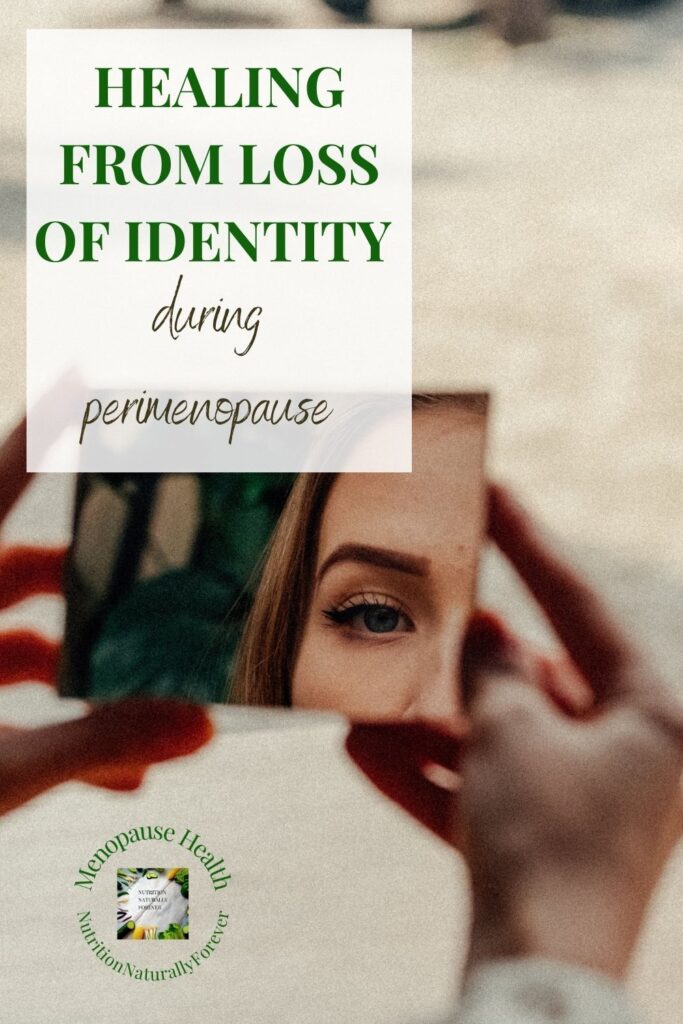
Healing From loss of identity during perimenopause.
There’s a quiet grief many women carry through perimenopause — one that doesn’t often get named.
- It’s not just the hot flushes or the disrupted sleep.
- It’s the moment you catch your reflection and feel like a stranger is looking back.
- It’s the clothes that no longer fit quite right.
The energy that feels harder to summon.
The sense that somewhere along the way, you’ve lost pieces of yourself — and you don’t quite know how to get them back.
For me, this journey of identity loss has always circled around one central theme: weight.
I grew up in the 70s and 80s watching my mother — elegant, fashionable, and always aware of her figure — navigate the unspoken pressure all women seemed to carry.
Compliments were tied to shrinking bodies.
Celebrations came with lost pounds.
It became the lens through which I measured myself too.
I was naturally slim in my younger years, always a classic pear shape. A UK 10/12 in my twenties. A 12/14 after having children. Then, as I moved into my forties and beyond, 14/16 became my new normal.
Although these changes might seem subtle, they rocked my sense of identity.
I had internalised the idea that thin meant healthy, happy, and worthy — and now I was none of those things… or so I thought.
Looking back at old photos now, I see a beautiful body I never truly appreciated.
One that carried me through love, motherhood, stress, joy — and I feel a soft sadness that I didn’t see her clearly at the time.
This post is for anyone who’s feeling disconnected from themselves in this season of life. For anyone who’s grieving the body they used to have, and wondering who they’re becoming now.
You are not alone — and you are not broken.
You’re in a transition that, while uncomfortable, can lead to something profoundly more grounded and real.
Let’s talk about what it means to lose — and reclaim — your identity during perimenopause.
When You No Longer Feel Like “You”
One of the most unsettling parts of perimenopause is the creeping sensation that you’re no longer yourself.
It’s not usually one big thing — it’s a series of small shifts that slowly pull you away from who you used to be.
Your moods are more unpredictable. Your patience is thinner. Your confidence feels shaky, even in areas where you once felt sure of yourself.
Maybe your body doesn’t move the way it used to, or it no longer responds to food and exercise in the same familiar way.
You might look in the mirror and feel… lost.
For so many women — myself included — this loss of identity is deeply tied to our relationship with our bodies.
We were raised to believe that how we looked was a reflection of our worth.
That thinness meant discipline, desirability, success.
We internalised it young, often before we could question it. And so, when our bodies begin to change in perimenopause — when the softness comes, when weight redistributes, when energy dips — it can feel like a personal failure.
I remember trying to “fix” my body in all the ways I’d been taught.
Cutting calories. Exercising harder. Restricting and overthinking every bite. But none of it worked anymore. My old methods betrayed me. I felt like I was betraying myself.
The truth is, we’re not doing anything wrong — our bodies are doing exactly what they’re meant to. But we’ve been taught to fight them instead of listening.
That disconnection becomes the root of so much grief, because when your body no longer behaves the way it always has, you question your identity.
When society doesn’t prepare you for this shift, it’s easy to feel invisible.
If this is where you are right now — unsure, sad, frustrated — I want you to know: it makes sense. It’s valid. And it doesn’t mean you’ve lost yourself. It means you’re being called to meet yourself in a new, deeper way.
How Hormones Hijack Your Sense of Self
Perimenopause can feel like a sudden unravelling of your identity — and for many women, the shift begins long before their periods stop.
It often starts with subtle changes: a creeping low mood, brain fog that makes it hard to focus, a dip in energy levels, or mood swings that feel out of character.
You might brush it off at first, but as the perimenopause symptoms stack up — hot flushes, night sweats, weight gain, joint pains, and a general lack of motivation — it becomes harder to feel like the version of yourself you used to know.
Behind these unsettling symptoms are profound hormonal changes.
The dance of Estrogen and Progesterone play a major role in regulating the nervous system, mood, sleep, and even cognitive function.
So when those hormone levels begin to fluctuate wildly, it’s no surprise that psychological symptoms like feelings of anxiety, panic attacks, low self-esteem, and symptoms of depression often emerge — especially when paired with the physical realities of vaginal dryness, body image shifts, and disrupted sleep.
For many perimenopausal women, these changes don’t just impact their health — they alter their daily life, their relationships, and their sense of identity.
You might feel distant from your family members, disconnected from social activities, and uncertain in spaces where you used to feel confident.
Your mental health symptoms may seem invisible to others, but internally, they have a negative impact on your quality of life.
The constant bombardment from social media, often showcasing “before and after” transformations or unattainable ideals, only intensifies the pressure.
It becomes easy to believe you’re failing — that you need to fix yourself, shrink yourself, or keep up a version of “you” that no longer fits this life stage.
You might find yourself questioning every choice — whether hormone therapy, cognitive behavioural therapy, or self-compassion practices are the best way forward.
Maybe you’ve tried prescription medications, sought medical advice, or even wondered if there’s any treatment option that truly works.
This isn’t just a “phase.”
It’s a pivotal moment in your menopause experience and while the physical symptoms of menopause can be overwhelming, this transition is also a doorway — an invitation to come back to yourself in a new, more compassionate way.
Reclaiming Your Identity — One Gentle Step at a Time
What if this wasn’t the end of who you are… but the beginning of who you’re becoming?
While perimenopause symptoms can feel like a betrayal, they’re also an invitation — a nudge to turn inward, to reset, to listen to the wisdom of your body experiences and honour the version of you that’s emerging.
This menopause transition isn’t about getting “back” to who you were — it’s about meeting yourself here, now, in midlife — with more grace, softness, and truth than ever before.
One of the most brilliant ways to start is by slowing down and creating space for self-compassion practices.
Instead of trying to “fix” yourself, ask: What does my body need to feel nourished today?
- Maybe it’s a balanced diet that supports stable hormone levels.
- Maybe it’s a long walk in nature to calm the nervous system.
- Maybe it’s permission to rest, to feel, or to grieve.
Rebuilding a fractured sense of self requires tenderness.
For me, the turning point came when I realised I’d spent decades treating my body like a project — constantly trying to shrink her, shape her, earn worth through body image. But during perimenopause, the rules changed. My body asked for kindness, not control. And I had to learn how to offer that.
This is also a powerful time to reflect on what truly brings you joy.
So many midlife women discover new positive areas of life during this season — from creative hobbies, to social activities, to new lifestyle changes that bring more energy and peace.
Tending to your mental health with practices like cognitive behavioural therapy, journaling, or support groups can be an excellent way to process the emotional issues that arise and reset unhelpful negative thinking.
This chapter is a unique opportunity to write a new story — one where you’re no longer chasing perfection, but living in deep connection with your changing body and evolving self.
You are allowed to outgrow old beliefs.
You are allowed to make positive change.
You are allowed to love who you are becoming.
Losing your sense of identity during perimenopause can feel lonely — but it doesn’t have to be.
This chapter of your menopausal journey is not the end of your vibrancy, clarity, or self-worth. It’s the beginning of a deeper connection with who you truly are beneath the noise, the conditioning, and the old rules you’re finally ready to break.
If you’re ready to feel more like you again — with clarity, confidence, and energy — I’d love to invite you to book a 1-1 online Strategy Call.
In this focused session, we’ll work together to quickly identify the simple shifts that can help ease your symptoms of the menopause — whether it’s low mood, fatigue, brain fog, or just a sense of feeling lost.
You’ll leave with personalised, practical next steps to support your mental health, nourish your body, and move forward with confidence.
And if you decide you’d like deeper support, the cost of this call can be fully credited toward either my 28-day or 12-week menopause program.
This is your moment to reset, reconnect, and reclaim your path.


