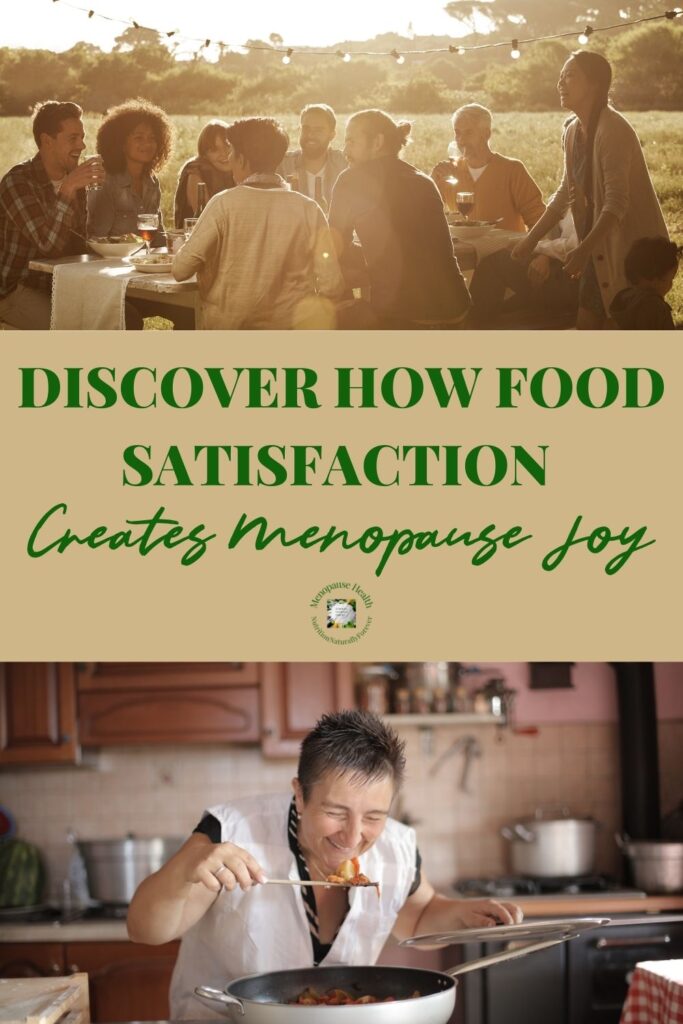
Discover How Food Satisfaction Creates Menopause Joy.
Menopause is a time of transformation, physically, mentally and spiritually.
It’s a season of change that comes with many challenges and you may feel like it has sucked the joy right out of your life.
However, one surprising yet powerful way to cultivate joy is through food satisfaction.
When was the last time you sat down to a meal that truly delighted your senses, left you feeling nourished, and brought a smile to your face?
In our fast-paced world, steeped in diet culture it’s easy to lose touch with the simple pleasure of eating.
Yet, during menopause, reconnecting with this pleasure can be a game-changer, not just for your emotional well-being but also for your physical health.
This blog explores how embracing food satisfaction, one of the principles of intuitive eating, can unlock a sense of joy during menopause.
Through intuitive eating, you can move beyond ristriction and rules, tuning in to what your body truly craves.
Let’s dive into what food satisfaction really means, why it matters during menopause, and how you can create meals that nourish not just your body but your soul because food isn’t just fuel, it’s a pathway to a vibrant, joyful life.
What is Food Satisfaction?
Let’s start with what is satisfaction
Fulfilment of one’s wishes, expectations, or needs, or the pleasure derived from this.Dictionary Definition
Food satisfaction is more than just fueling your body it’s about truly enjoying the experience of eating and feeling fulfilled, both physically and emotionally, after a meal.
It’s the sense of pleasure and contentment that comes from choosing and savouring foods that align with your body’s needs and your personal preferences.
During menopause, food satisfaction becomes especially important.
Hormonal changes can leave you feeling out of sync with your body, leading to cravings, emotional eating or a loss of appetite altogether.
Learning to reconnect with what feels satisfying can help ground you in the present moment and nurture your body in a way that feels joyful and aligned.
Unlike the rigid “rules” of dieting, which often emphasise control over enjoyment, food satisfaction invites you to tune in to what your body truly desires.
It’s about asking yourself, What do I feel like eating? What will leave me feeling good—not just now, but for hours afterward?
When you eat in a way that satisfies your senses and supports your health, you’re not only nourishing your body, you’re also nurturing your mind and spirit.
For women in menopause, satisfaction isn’t just a luxury, it’s a necessity, it’s about quality of life.
Well-balanced and satisfying meals can help stabilise mood, balance energy levels, and even support hormone health by reducing the stress response triggered by restrictive eating and lack of balanced nourishment.
Choosing foods that bring you pleasure and fulfilment can be a powerful tool for creating a sense of joy during this transitional phase.
Food satisfaction is an act of self-care and self-trust.
It’s about honouring your body’s signals and embracing the idea that eating well doesn’t mean sacrificing joy.
How to Identify What Feels Satisfying
Discovering what feels satisfying begins with reconnecting to your body’s natural cues and tuning in to your preferences.
It’s about moving away from eating on autopilot or following external food rules (you can read more about food rules and the food police in this previous post) and instead listening to what your body is telling you.
Here’s how to get started:
1. Slow Down and Tune In
Take a moment before eating to check in with yourself. Ask:
- Am I physically hungry, or is this emotional hunger?
- What kind of food would feel good right now—something warm, cool, crunchy, or soft?
Slowing down during meals also allows you to notice when you start to feel satisfied. Mobile phones should be ignored, reduce all distractions. Eating mindfully helps you avoid over- or under-eating, which can disrupt hormone balance and energy levels during menopause.
2. Experiment with Flavours and Textures
Satisfaction often comes from foods that not only nourish but also delight the senses.
Reflect on what you enjoy most:
- Do you prefer savoury, sweet, spicy, or tangy flavours?
- Do you enjoy crisp, creamy, or chewy textures?
- Do you feel comforted by warm dishes or refreshed by cooler ones?
Experiment with different ingredients and cooking methods to find what resonates with you. For example, a warm bowl of spiced sweet potato soup might feel satisfying on a cold evening, while a crisp apple and nut butter snack could bring joy in the afternoon.
3. Pay Attention to After-Meal Feelings
True satisfaction doesn’t end with the last bite at meal time.
Notice how you feel an hour or two after eating:
- Do you feel energised, clear-headed, and calm?
- Or do you feel sluggish, bloated, or still hungry?
Tune into your fullness scale, stop eating for a moment while eating to see if you body needs more food or not. These reflections can guide you toward foods that leave you feeling nourished and joyful long-term.
4. Use a “Food Joy” Journal
Keep a simple journal to explore what feels satisfying over time.
Write down:
- What you ate.
- How it tasted and felt to eat it.
- How you felt afterward.
Patterns will emerge, helping you identify which foods and meals bring you the most satisfaction and joy.
5. Honour Your Menopause Body’s Changing Needs
Your body’s preferences may change during menopause due to hormonal shifts.
What once felt satisfying might not anymore, and that’s okay.
Stay curious and open to discovering which types of food or combinations that suit this phase of life.
By taking the time to identify what feels satisfying, you can transform meals into moments of joy and self-connection. This practice not only enhances your eating experience but also supports your physical and emotional well-being during menopause.
Practical Tips for Creating Satisfying Meals
Creating meals that truly satisfy doesn’t have to be complicated.
With a few thoughtful practices, you can craft meals that not only nourish your body but also delight your taste buds and leave you feeling energised.
Here are some practical tips to help you get started:
1. Build Well-Balanced Meals for Hormone Health
A satisfying meal begins with balance.
Combining proteins, healthy fats, and fibre-rich carbohydrates ensures steady energy, stable blood sugar, and hormonal harmony, focus on food quality.
Here’s how to put it into practice:
- Proteins: Include options like chicken, fish, beans, tofu, or eggs to promote satiety and support muscle maintenance.
- Healthy fats: Add foods like avocados, nuts, seeds, olive oil, or fatty fish for richness and brain health. (not seed oils)
- Fibre-rich carbs: Choose complex carbohydrates like sweet potatoes, quinoa, oats, or brown rice to sustain energy and aid digestion.
2. Embrace Variety with Flavours and Textures
A satisfying meal engages all your senses. Experiment with spices, herbs, and seasonings to elevate simple dishes.
For example:
- Sprinkle cinnamon and nutmeg over roasted sweet potatoes for a cozy, warming flavour.
- Add fresh herbs like coriander or basil to brighten soups or salads.
- Incorporate crunchy textures with nuts, seeds, or crisp veggies alongside softer ingredients.
A variety of foods not only enhances satisfaction but also ensures you’re getting a diverse range of nutrients to support overall health.
3. Make the Eating Experience Enjoyable
Food satisfaction isn’t just about what you eat, it’s also about how you eat.
Create a pleasant environment that allows you to fully enjoy your meals:
- Sit down at a table, maybe in the dining room, instead of eating on the go.
- Use your favourite plates or utensils to make the meal feel special.
- Remove distractions like mobile phones or TVs, so you can focus on savouring each bite.
Taking time to eat mindfully helps you tune into your body’s signals and appreciate the full experience of eating.
4. Adjust Portion Sizes to Match Your Hunger
Portion sizes matter when it comes to satisfaction.
Too little food can leave you unsatisfied, while too much can lead to discomfort.
There are different types of hunger. Practice checking in with your hunger before and during the meal:
- Start with a moderate portion and allow yourself to go back for more if you’re still hungry.
- Stop eating when you feel pleasantly full, not stuffed.
This mindful approach ensures you’re meeting your body’s needs without overindulging.
5. Plan Ahead for Satisfaction
Planning meals in advance can make it easier to create satisfying dishes, especially on busy days.
A few simple strategies are:
- Prepare ingredients like cooked grains, roasted vegetables, and proteins ahead of time.
- Keep versatile staples, like eggs, canned beans, and frozen veggies, on hand for quick meals.
- Batch-cook sauces or dressings to add instant flavour to any dish.
Having satisfying options ready to go can prevent you from resorting to less nourishing choices when time is tight.
By focusing on balance, variety, and mindful eating practices, you can create meals full of satisfying foods that are supportive of your menopause health goals.
These small shifts can transform the way you experience food, helping you find more joy and ease in every bite.
Busting Food Myths That Block Joy
For many women, menopause brings a heightened awareness of health and body changes.
Unfortunately, it’s also a time when myths about food and nutrition can create unnecessary fear and stress.
These myths often rob meals of joy, turning pleasurable foods into a source of anxiety rather than satisfaction.
Let’s address some of the most common myths and uncover the truth about eating for joy and well-being during menopause.
Myth 1: “I Have to Avoid Carbs to Prevent Weight Gain.”
Carbohydrates have been unfairly villainised, they are essential for both energy and mood.
The key is choosing complex carbohydrates, like oats, sweet potatoes, quinoa, and brown rice, which release energy slowly and provide fibre to support digestion and hormone health, especially progesterone which is needed to counter estrogen.
- The truth: Carbs are critical for producing serotonin, the feel-good neurotransmitter that supports a stable mood and restful sleep. Eating the right kinds of carbs in satisfying portions can actually help you feel better, not worse.
Myth 2: “I Should Stick to Low-Fat Foods to Stay Healthy.”
Decades of diet culture have ingrained the idea that fat is the enemy, but good fats, not PUFAs – polyunsaturated fatty acids, are a cornerstone of satisfying meals and hormonal health.
Foods like avocados, nuts, seeds, olive oil, and fatty fish provide the building blocks your body needs to produce hormones like progesterone, which helps balance estrogen dominance.
- The truth: Including fats in your meals is an important factor, it not only enhances flavour and satisfaction but also keeps you feeling fuller longer, reducing cravings and overeating later.
Myth 3: “I Can’t Enjoy ‘Indulgent’ Foods Without Guilt.”
Whether it’s a piece of chocolate cake, a buttery croissant, or a glass of wine, indulging in foods you love doesn’t have to derail your health.
In fact, denying yourself these pleasures often leads to overeating or feeling deprived.
- The truth: Allowing yourself to enjoy these foods mindfully, with a well-balanced approach can enhance your overall food satisfaction and reduce the likelihood of overindulging. Eating with joy and presence is far healthier than eating with guilt.
Myth 4: “I Need to Follow a Strict Diet to Stay in Control.”
Strict diets promise control but often leave you feeling restricted, stressed, and disconnected from your body’s needs.
They can also trigger hormonal imbalances by increasing cortisol (the stress hormone), which can exacerbate menopause symptoms.
- The truth: A flexible, intuitive approach to eating—where you trust your body’s internal cues supports both physical and emotional health.
Letting go of rigid rules allows you to focus on satisfaction and nourishment instead.
Myth 5: “Healthy Eating Means Sacrificing Flavour and Fun.”
Healthy meals are often seen as bland or boring, but this couldn’t be further from the truth.
Flavourful herbs, spices, and nutrient-dense ingredients can transform any dish into a vibrant, satisfying experience.
- The truth: Eating for health and eating for joy are not mutually exclusive. In fact, the more enjoyable your meals, the more likely you are to stick to nourishing habits that truly support your body.
By debunking these myths, you can free yourself from unnecessary food fears and embrace a more joyful, satisfying approach to eating.
Remember, food isn’t just about fuel, it’s about connection, comfort, and pleasure.
When you release the myths that block joy, you open the door to a more balanced, fulfilling relationship with food during menopause and beyond.
Real-Life Strategies for Embracing Food Satisfaction
Embracing food satisfaction is a practice that goes beyond knowing what to eat, it’s about shifting your mindset and daily habits to prioritise joy, nourishment, and self-connection.
Here are some practical strategies to help you bring food satisfaction to the forefront of your eating experience:
1. Release Guilt Around Food Choices
Food guilt can be a major roadblock to satisfaction. Instead of labeling foods as “good” or “bad,” try reframing your mindset to focus on how food makes you feel.
- Ask yourself: Does this food bring me pleasure? Does it align with how I want to feel after eating?
- Practice self-compassion. If you eat something that doesn’t leave you feeling your best, view it as a learning experience rather than a failure.
Letting go of feelings of guilt allows you to make food choices rooted in self-care, not self-punishment.
2. Stay Present During Meals
Mindful eating is one of the most effective ways to enhance satisfaction.
Create space to be fully present:
- Take a few deep breaths before starting your meal to centre yourself.
- Savour each bite, paying attention to the flavours, textures, and aromas, take in the complete sensory experience.
- Pause halfway through your meal to check in with your hunger and satisfaction levels.
Being present helps you connect with your body’s signals, making it easier to identify when you’ve had enough or need a little more.
3. Find Joy in the Small Details
Sometimes, it’s the little things that make a meal special.
Try:
- Adding a garnish, like fresh herbs or a sprinkle of seeds, to elevate the presentation.
- Using your favourite dishes or setting the table with care, even for a quick lunch.
- Creating a ritual, such as lighting a candle or playing calming music, to turn meals into moments of joy.
These small touches can transform an ordinary meal into an experience that feels nurturing and satisfying.
4. Trust Your Body’s Signals
During menopause, it’s common to feel disconnected from your body due to hormonal changes.
Rebuilding trust is key to finding satisfaction.
- Eat when you’re hungry and stop when you’re comfortably full.
- Honour cravings without judgment, recognising that they may be your body’s way of asking for specific nutrients or comfort.
- Stay flexible—your body’s needs and preferences may change from day to day, and that’s okay.
By trusting your body, you create a deeper sense of alignment and satisfaction with your eating habits.
5. Plan for Pleasure Without Over-Scheduling
While spontaneity can be satisfying, a little planning can ensure you always have foods you enjoy on hand.
- Keep a mix of fresh, frozen, and pantry staples ready to create meals you love.
- Plan for treats or indulgences you genuinely enjoy, whether it’s a rich chocolate or a savoury comfort food, and savour them without restriction.
- Avoid overcomplicating meal prep; simple, wholesome meals can be just as satisfying as elaborate ones.
Planning for pleasure removes the stress of decision-making and allows you to focus on enjoying your food.
6. Reflect and Celebrate Your Wins
At the end of each day or week, take a moment to reflect on meals or snacks that brought you joy. Ask yourself:
- What made that meal satisfying?
- How did it make me feel physically and emotionally?
Celebrate these moments as wins, reinforcing the idea that satisfaction is both achievable and worthwhile.
By incorporating these strategies into your daily life, you can shift your relationship with food to one that prioritises joy, balance, and self-care.
Food satisfaction isn’t just a one-time goal, it’s an ongoing practice that can transform the way you nourish yourself during menopause and beyond.
Embrace the Joy of Food Satisfaction
Food satisfaction is a gateway to more than just nourishing your body, it’s about reconnecting with yourself, finding joy in the simple act of eating, and creating a deeper sense of harmony during menopause.
By shifting your focus from restrictive rules to intuitive, joyful choices, you can transform meals into moments of care, comfort, and celebration.
Menopause is a season of profound change, but it also offers an opportunity to realign with your body’s unique needs.
By embracing satisfaction, you’re not only supporting your physical health but also nurturing your emotional well-being and rekindling a positive relationship with food.
As you move forward, remember that satisfaction is a personal journey.
It’s about experimenting, reflecting, and honoring what feels right for you.
Trust your body, give yourself permission to enjoy food without guilt, and celebrate the small, satisfying moments that bring joy to your everyday life.
By prioritising food satisfaction, you’re not just eating, you’re reclaiming your power, rewriting your story, and stepping into a menopause experience that feels vibrant, fulfilling, and uniquely yours.
In my Menopause SHIFT Program, one of the 8 steps in the pathway is The Intuitive Nutrition Guide.
I am currently preparing for the final beta test of this 12-week program and offering 10 exclusive places at half price.
This is your chance to be part of a transformative journey, but these spots will fill quickly!
- Are you tired of feeling like you’re just getting by during menopause?
- Do you struggle with emotional eating, cravings, or confusion about what your body really needs?
- What if you could finally understand how to nourish your body in a way that energises, balances your hormones, and supports your overall well-being—without restrictive diets, guilt, or confusion?
- Imagine having a clear, step-by-step roadmap that teaches you to eat intuitively, manage stress, and feel empowered to make choices that honour your body, your hormones, and your unique needs.
In this program, you’ll:
- Understand the root causes of your symptoms and how to balance your hormones naturally.
- Learn how to nourish your body to feel your best during menopause (and beyond!) with delicious, satisfying food that fuels your vitality.
- Shift your mindset around food so that you can finally break free from the cycle of diets and guilt.
I’ve designed this program for women just like you, who want to take control of their health and experience lasting transformation.
But here’s the catch: I’m only offering 10 spots at half price for this final beta test, this isn’t a marketing ploy, I want to be able to dedicate my full attention during the final phase of testing before I fully launch the program at the full price.
Want to know more about what the program entails, and how it can change your life? READ MORE HERE.
In the linked document, I answer frequently asked questions and dive deeper into what you can expect and your role in that.
Are you ready to take the next step toward a vibrant, empowered, and healthy menopause experience?